


Are rotating electric toothbrushes better?
 Nov 13, 2024|
 View:597
Rotating electric toothbrushes are often considered more effective than manual toothbrushes due to their ability to remove plaque more effectively and promote better oral hygiene. Studies have shown that oscillating-rotating electric toothbrushes provide statistically significant reductions in plaque and gingivitis compared to sonic toothbrushes. They are particularly beneficial for people with sensitive teeth and gums due to their gentler per-minute rotation/vibration.
The design of rotating electric toothbrushes typically involves a brush head that moves in a circular motion, rotating at high speeds, which is effective in breaking up plaque and reaching areas that are difficult to clean with a manual toothbrush. Some models also come with features like pressure sensors and timers that help users brush for the recommended duration, ensuring a thorough cleaning.
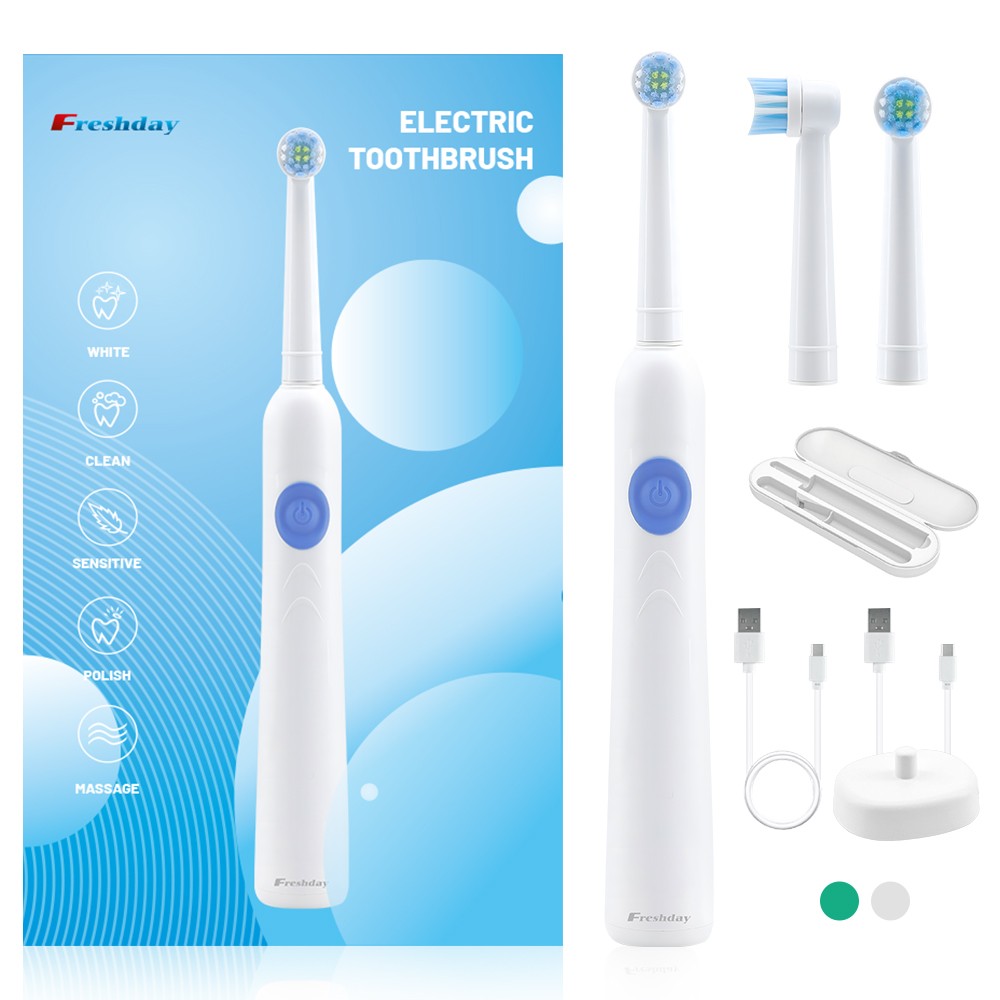
However, there are also disadvantages to consider. Electric toothbrushes can be more expensive, both in terms of the initial investment and the ongoing cost of replacement heads. They also require charging, which can be inconvenient if the battery runs out at an inopportune time.
In summary, rotating electric toothbrushes offer several advantages, such as superior plaque removal and convenience features, but they also come with a higher price tag and the need for regular charging. Despite these drawbacks, many users find that the benefits of using an electric toothbrush outweigh the disadvantages, leading to better oral health outcomes.


